
What do you do when bureaucratic red tape puts you in a situation where no matter what decision you make, you end up losing? In today’s episode of Just One More Site I want to tell you the frustrating story of a developer who, because of poor zoning laws, was left with two choices: let his 1976 self-serve carwash fall into disrepair and remain open OR renovate the carwash, and lose his CO.
Before we jump into this story I do want to note that I will not be sharing the actual location of this development as I still work with this jurisdiction and its planning department. It is an unfortunate situation that has been created by previous teams updating zoning ordinances, however, the current staff is doing their job, which is to enforce the rules as they are written. They are aware of how ridiculous the situation is, but have decades of red tape to remove to fix the underlying issues.
The Intersection Improvement Impasse
On the Southeast corner of an intersection seeing 25,000 or more cars a day where an arterial road and major collector road meet lies a self-serve carwash. This carwash was one of the first buildings to go in on the intersection in 1976. Just over a decade later, in 1987, a Chevron gas station, owned by the same developer, went in adjacent to the carwash on the same corner. In 1997, Circle K developed the Northeast corner of the intersection with a competing gas station and convenience store.
The Northwest corner is home to a strip mall with high vacancy rates. In 2022, the owner of the Chevron and carwash developed a new Starbucks drive thru in an effort to help revitalize the intersection. The recent success of the coffee shop made him decide it was time to redevelop the existing carwash converting it to an express tunnel wash to support the gas station.
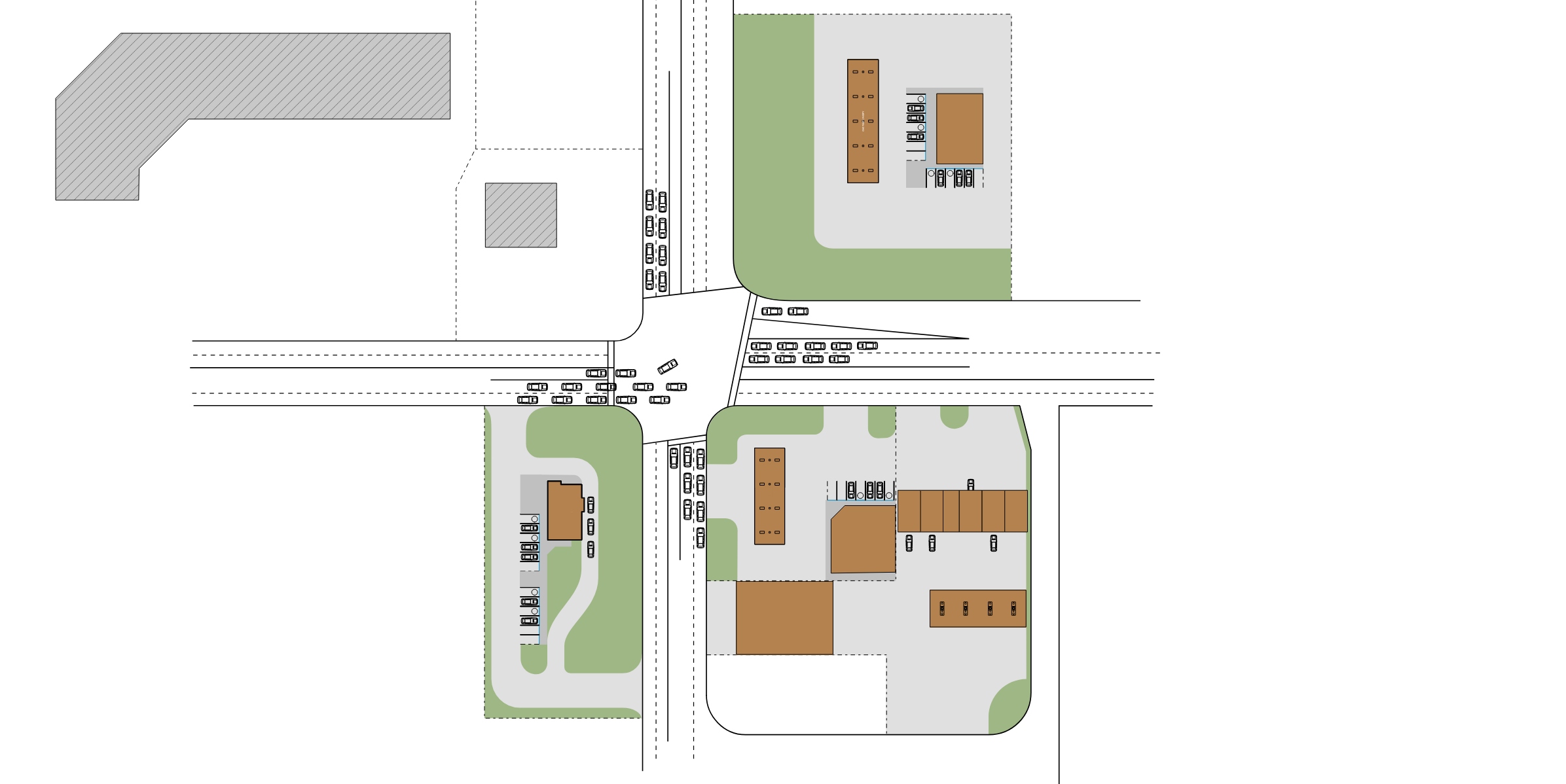
Initially, everything looked great. A carwash was a permitted use with a Special Use Permit (SUP). The conceptual site plan showed a 120’ carwash could fit comfortably with excellent ingress and egress. Residential was just out of range from requiring any sound walls or noise mitigation. Then, during the preapp meeting, disaster struck. We received the following comment:
Per Section XX-XX-X(X)(X) of the zoning ordinance, when a Special Use Permit is required, the number of automobile related activities within 600 feet of an intersection of arterial streets shall not exceed two (2), including Automobile/Vehicle Washing, Automobile Service Stations, Automobile Sales or Rental Lots, or Automobile/Vehicle Repair. Currently existing at the intersection are two Automobile Service Stations, one at the northeast corner and a second at the southeast corner.
The maximum number of auto-oriented uses at this intersection is met and may not be exceeded. The Special Use Permit Criteria cannot be met. Therefore, the proposed use is not permitted at this location.
During 2011 city code ordinance updates, the above section was added to limit the number of automotive uses permitted at each intersection to 2. Unfortunately, this intersection already had 3 automotive uses prior to that and now the 1976 carwash, the 1987 Chevron, and the 1997 Circle K were all non-conforming. The first to go in for a permit would be required to meet current code. Code that said they would no longer be permitted to exist as an automotive use. It was a stalemate. Which 30+ year old structure could hold on the longest?
So… Is there a path forward?
As it stands right now, the owner of the property is working with a land use attorney to find a way forward. Ultimately his goal is to improve the intersection and offer a service, which would benefit the neighborhood. A modern express tunnel has proved to be something the community has desired as many past customers of the self-serve are still asking for the wash to be upgraded.
We reached out to the planner’s office for a list of approved developments for the property and number one on their list was multifamily housing. Further research into this use revealed density restrictions that would limit the development to four total units, which the owner could not make numbers pencil at. Alternative uses are retail and office uses, which is a hard sell for a developer when the surrounding strip malls and office buildings are approaching 75% vacancy.
For the time being, the owner and his land use attorney are going to continue pushing for a variance or updates to the zoning code. It will be a long road as removing bureaucratic red tape is not an easy feat. We wish them the best of luck.
Dealing with Red Tape During Development
Unfortunately, red tape is a nearly unavoidable part of development, but usually it doesn’t have to derail your project. Understanding local requirements, building relationships with jurisdictional staff, and bringing experienced professionals to the table early can help you avoid costly surprises and keep things moving. The key is to plan for the process, not just the construction, and recognize that navigating approvals successfully is just as important as getting the project built.
That’s where Hover can help. Our team works with developers to navigate the complexities of site planning, zoning, entitlements, and permitting, helping identify potential roadblocks before they become costly delays. Whether you’re developing your first project or expanding an existing portfolio, Hover can help you understand what’s ahead, work through the approval process, and move your project toward construction with greater confidence. Ready to get your next project moving? Let’s talk.