QUICK LUBE & AUTO REPAIR
Designed for Efficiency, Built for Throughput.
Auto service facilities are highly operational environments where layout, circulation, and building design directly impact how many vehicles can be serviced in a day. From quick lube shops to full-service repair centers and dealership service departments, each format requires a different approach to site planning and building design. Vehicle flow, technician efficiency, equipment layout, and customer experience all need to work together to create a facility that performs.
At Hover Architecture, we work with operators and developers to design auto service facilities that support daily operations, maximize throughput, and create buildings that are made to last.
QUICK LUBE & AUTO SERVICE
Auto service facilities are highly operational environments where layout, circulation, and building design directly impact how many vehicles can be serviced in a day.
From quick lube shops to full-service repair centers and dealership service departments, each format requires a different approach to site planning and building design. Vehicle flow, technician efficiency, equipment layout, and customer experience all need to work together to create a facility that performs.
At Hover Architecture, we work with operators and developers to design auto service facilities that support daily operations, maximize throughput, and create buildings that are made to last.
A WIDE RANGE OF SERVICE FACILITY TYPES
Auto service is not a one-size-fits-all industry. Each type of facility comes with its own operational model and design requirements.
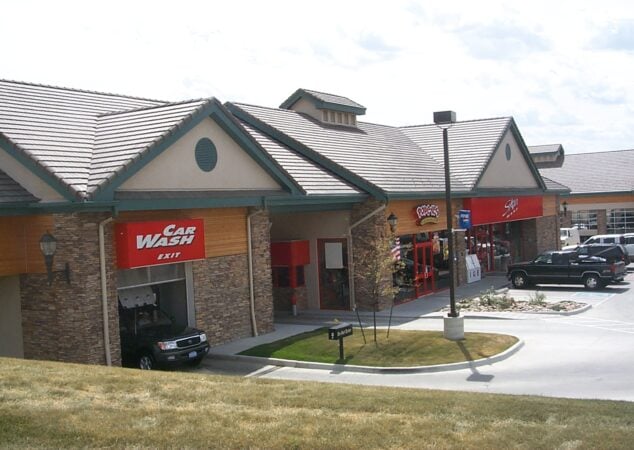
Quick lube centers are built for speed and repetition, often utilizing zip pits that allow technicians to work beneath the vehicle while maintaining a continuous service flow. These facilities rely on tight, efficient layouts that keep vehicles moving in and out quickly.
Full-service repair facilities require a different approach. These buildings often include multiple service bays, vehicle lifts, and in some cases basements or sub-grade work areas. The layout must support a wider range of services while maintaining safe and efficient working conditions for technicians.
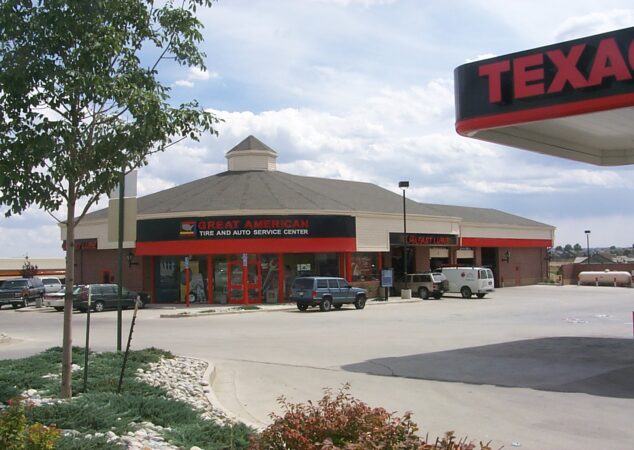
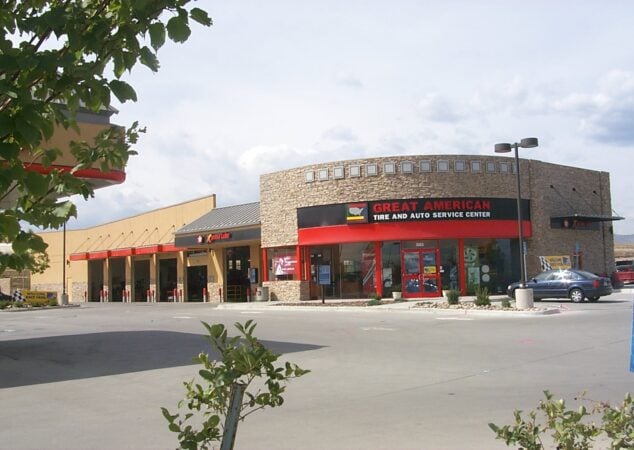
Tire and service centers place additional demands on the building. These facilities require significant space for tire storage, equipment, and inventory, sometimes incorporating mezzanines or dedicated storage areas to maximize usable space.
Auto dealerships introduce another layer of complexity as service departments must integrate seamlessly with the sales and the customer experience side of the business, often requiring dedicated service drives, write-up areas, and back-of-house service operations that can handle high daily volumes.
Each of these formats requires thoughtful planning to ensure the building supports both the technical work being performed and the overall customer experience.


DESIGNING FOR FLOW AND FUNCTION
At the core of every successful auto service facility is a layout that works for you.
Vehicle circulation must be intuitive for customers while allowing staff to operate efficiently behind the scenes. Entry points, service drives, bay configurations, and exit paths all play a role in keeping vehicles moving without creating bottlenecks or worse, accidents.
Inside the building, equipment layout, bay spacing, and support areas must be carefully planned to maximize productivity and safety. Even small inefficiencies in layout can impact service times and daily capacity.
Our team focuses on designing facilities where both the site and the building work together to support smooth, consistent operations.
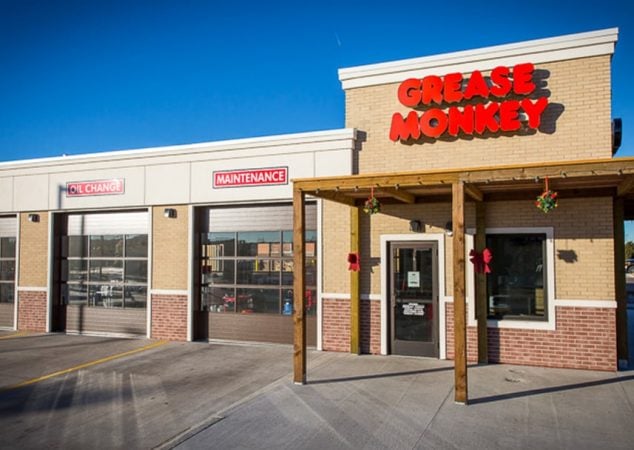
PROJECT SPOTLIGHT: GREASE MONKEY
Many auto service brands including Grease Monkey operate on franchise or multi-location models, where consistency and repeatability are key to growth.
Hover Architecture works with both franchise systems and corporate operators to develop prototype designs that can be adapted across multiple sites. These prototypes streamline city planning approvals, maintain brand consistency, and reduce design time as new locations are rolled out.
At the same time, we understand that no two sites are exactly the same. Each location must respond to local zoning requirements, site constraints, and market conditions. Our approach balances prototype consistency with site-specific adaptability to keep projects moving forward efficiently.

PROJECT SPOTLIGHT: GREASE MONKEY
Many auto service brands including Grease Monkey operate on franchise or multi-location models, where consistency and repeatability are key to growth.
Hover Architecture works with both franchise systems and corporate operators to develop prototype designs that can be adapted across multiple sites. These prototypes streamline city planning approvals, maintain brand consistency, and reduce design time as new locations are rolled out.
At the same time, we understand that no two sites are exactly the same. Each location must respond to local zoning requirements, site constraints, and market conditions. Our approach balances prototype consistency with site-specific adaptability to keep projects moving forward efficiently.
EXPERIENCE THAT SUPPORTS YOUR GROWTH
Auto service facilities require a design partner who understands both the technical requirements of the building and the operational goals of the business.
Hover Architecture works with a wide range of clients across the auto service industry, including:
- Franchise operators expanding into new markets
- National and regional brands developing prototype locations
- Independent operators building or upgrading facilities
- Dealership groups integrating service departments into larger developments
From early site evaluation through building design, we help teams create facilities that are efficient, scalable, and built to support long-term growth.
PLANNING YOUR NEXT PROJECT
If you’re planning a new auto service facility, the first step is understanding how the site can support vehicle flow, building layout, and operational efficiency.
Hover Architecture offers complimentary conceptual site plans to help operators and developers explore what’s possible before moving into design.