

The Car Wash Show 2025 in Las Vegas brought together industry leaders, developers, equipment manufacturers, and innovators under one roof all with a shared goal of shaping the future of carwashing. Although the show floor appeared to be a little quieter than previous years, the energy was high and booths were buzzing, a few clear themes rose to the top. The market continues to mature, and with that maturity comes more strategy, more scrutiny, and more innovation.
Here are three takeaways from this year’s show that developers, operators, and industry partners should be paying attention to:
Developers are Taking a Sniper’s Approach
Just a few years ago, site selection for express car washes felt like a gold rush. Developers were picking up land quickly, even marginal “B-” or “C+” sites, with the assumption that demand would carry performance. But in 2025, the tone has shifted.
In today’s environment, the phrase “shooting fish in a barrel” no longer applies. Developers are becoming far more selective and taking what could be considered a “sniper’s approach.” It’s not just about traffic counts and visibility anymore. Teams are diving deep into demographic trends, competitive saturation, ingress/egress limitations, and zoning risks before pulling the trigger on new projects.
Why the change?
Market saturation and rising construction costs have forced developers to rethink what constitutes a “good” site. In some markets, the days of launching a profitable wash just by being the first on the block are over. Instead, operators are laser-focused on long-term viability, return on investment, and brand differentiation.
It’s not a slowdown — it’s a shift toward smarter growth.
See how Hover can help with the site selection and feasibility process with a complimentary conceptual site plan.
Renovations, Conversions, & Rehabs Look to Capture a Slice of the Pie
One of the more interesting threads at the show was the resurgence of renovation-focused development strategies. Several international equipment and service providers including JetX, Starwash, and Greenmatik are looking to expand their U.S. footprint through adaptive reuse rather than new builds.
Many of these companies have seen strong success abroad particularly in Asia and Europe where retrofitting existing spaces is often the only path forward in dense urban environments. They’re now bringing that mindset stateside.
While their cost-efficient equipment and modular systems have given them an edge internationally, early signs suggest they’ll face new challenges here. Chief among them? Tariffs and trade restrictions, which are beginning to erode the once-clear price advantage of overseas-manufactured components.
Still, the interest in conversions is real. Why?
- Speed to market: Renovating an older wash or converting a defunct lube shop can cut timelines in half.
- Lower barrier to entry: Site entitlement and utility infrastructure may already be in place.
- Brand refresh opportunities: Operators can bring tired facilities up to today’s standards without starting from scratch.
Franchise systems and independent groups alike are taking a fresh look at their existing portfolios, especially older full-serve locations that might benefit from an express conversion. With the right capital improvements and equipment upgrades, yesterday’s eyesores can become tomorrow’s top performers.
Mini Tunnels are on the Rise
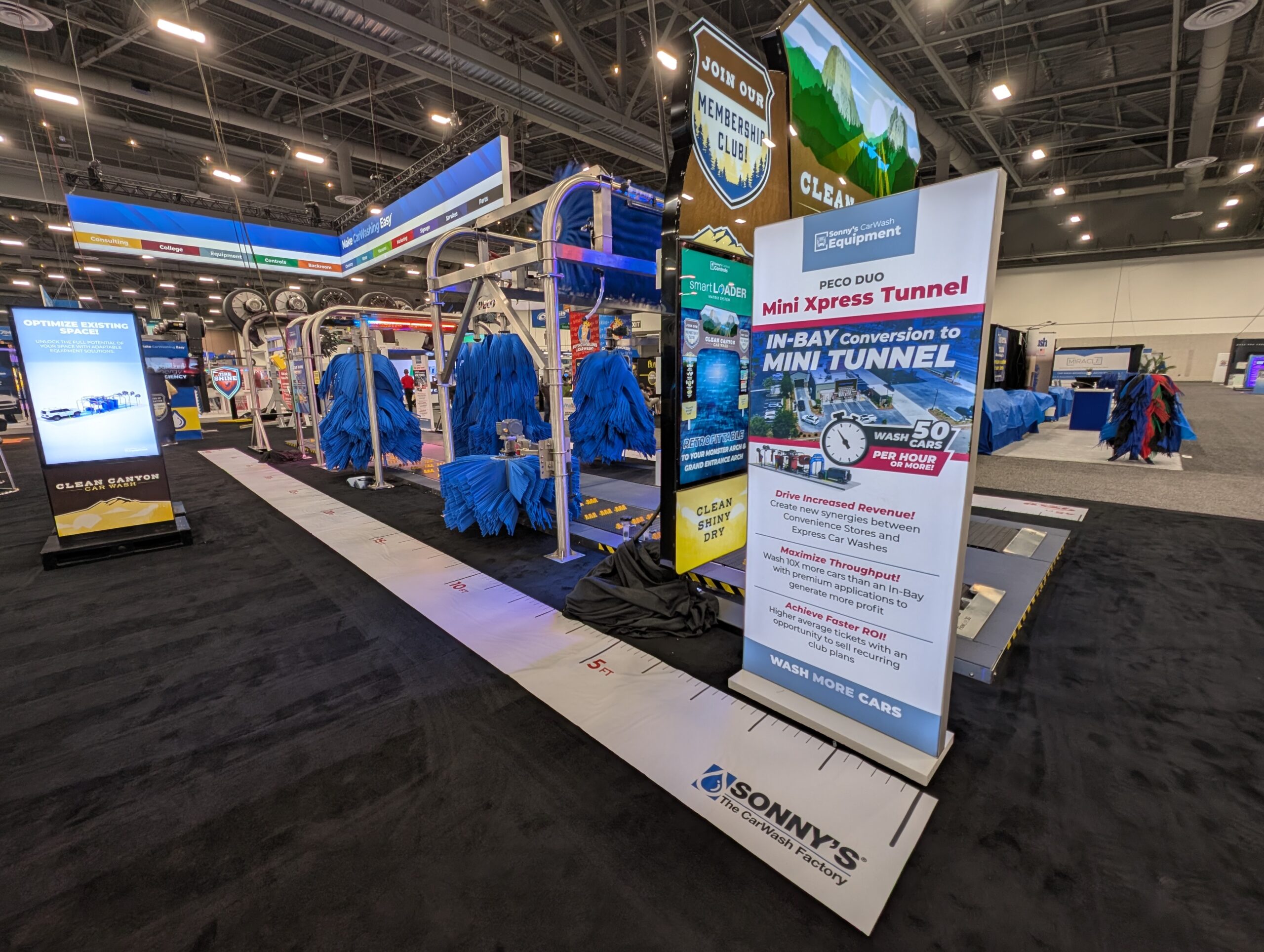
Outside of software and data collection, one of the most talked-about trends on the show floor this year was the mini tunnel — compact express tunnels typically ranging between 40 and 60 feet in length. Several major equipment manufacturers debuted mini tunnel concepts, and the interest from developers was palpable, particularly from operators with smaller urban lots or C-store backgrounds.
The appeal is easy to understand.
As land prices soar and construction costs climb, building a full-scale 100+ foot tunnel on a one-acre parcel is becoming less feasible in many markets. Yet consumer demand for express wash convenience remains high. Mini tunnels offer a middle ground:
- Smaller footprint
- Lower startup costs
- Faster construction timelines
- Ability to fit into underutilized parcels or pad sites
Crucially, these aren’t just scaled-down novelties. Many mini tunnel systems offer comparable throughput (Sonny’s 40’ Mini Tunnel boasts a throughput of up to 50 cars per hour) and wash quality to their full-size counterparts, especially when paired with efficient loading systems and fast-drying equipment.
Operators of convenience stores and gas stations, who have long been relegated to rollovers and in-bay automatics, now see an opportunity to upgrade their wash experience without sacrificing parking or fuel revenue.
For developers, mini tunnels also open the door to multi-site portfolios in tighter urban zones, where the economics of traditional builds just don’t pencil out.
Final Thoughts
The Car Wash Show 2025 made one thing clear: the express car wash industry might feel like it’s slowing down, but I’d like to challenge that sentiment… It’s not slowing down, but rather evolving. We’re exiting what has been a growth stage for the past 3-5 years and entering a maturity stage.
Gone are the days of growth at all costs. Today’s top operators are more analytical, more strategic, and more open to alternative formats than ever before. Whether it’s precision site selection, adaptive reuse of legacy properties, or compact tunnel designs to stretch capital further, the game is changing and those who adapt will lead the next wave of success.
At Hover Architecture, we’re already helping clients navigate this changing landscape with smarter site planning, feasibility support, and flexible designs tailored to today’s realities. Whether you’re scouting your next site, looking to refresh an old property, or curious about how a mini tunnel might fit into your business model, let’s talk.
The future of carwashing is still bright, but getting there takes vision, strategy, and the right team behind you.