

If you are planning a commercial project, whether it is a carwash, oil change facility, or storage development, one of the biggest hurdles you will face is permitting. We’ve covered related topics before, like the importance of conditional use permitting, the value of pre-application meetings, and how zoning can make or break a carwash site. Those steps get you ready to submit, but once the full set of construction documents is in, the real waiting game begins.
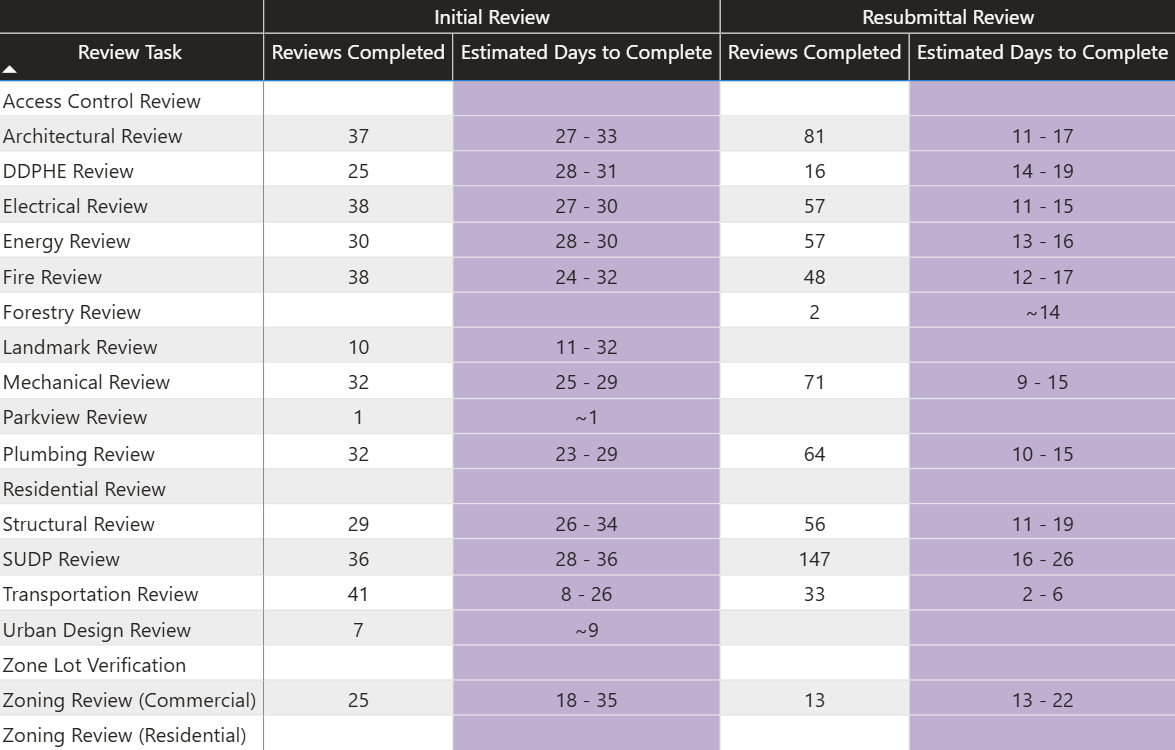
The process has a rhythm that is consistent across the country, but the timeline and level of scrutiny vary wildly depending on the jurisdiction. Some cities have streamlined, well-resourced plan review departments. Others operate more like a slow-moving glacier. If you have ever tried to get a commercial permit approved in Denver, you know exactly what I mean. As of writing this blog post, the average time to building permit approval is 293 days…

The General Sequence to Get to Building Permit
After your construction documents are complete and submitted, the first stop is initial review. Every city has a target for this phase. Some jurisdictions will turn comments around in a few weeks, while others can take several months.
Once that first round of comments comes back, you and your design team address city comments and resubmit. Then the second cycle begins. Most cities will review resubmittals faster than the original application, often cutting the timeline in half. A third round is common, particularly on more complex commercial developments. At Hover we advise clients to expect at least two to three cycles of comments as a baseline.
Of course, there are always exceptions. Some jurisdictions are more exacting than others. It is not unheard of to see five or more review cycles if a plan reviewer is especially picky, if multiple departments get out of sync, or if the local code has quirks that weren’t addressed in earlier cycles. The process is still the same though: comments, response, and resubmittal, but the number of laps around the track can grow.
Jurisdictional Differences
After your construction documents are complete and submitted, the first stop is initial review. Every city has a target for this phase. Some jurisdictions will turn comments around in a few weeks, while others can take several months.
Once that first round of comments comes back, you and your design team address city comments and resubmit. Then the second cycle begins. Most cities will review resubmittals faster than the original application, often cutting the timeline in half. A third round is common, particularly on more complex commercial developments. At Hover we advise clients to expect at least two to three cycles of comments as a baseline.
Of course, there are always exceptions. Some jurisdictions are more exacting than others. It is not unheard of to see five or more review cycles if a plan reviewer is especially picky, if multiple departments get out of sync, or if the local code has quirks that weren’t addressed in earlier cycles. The process is still the same though: comments, response, and resubmittal, but the number of laps around the track can grow.
Average Time to Building Permit Across the Country
Note: Times to permit discussed in this post are as of Summer 2025 and may no longer be accurate. For the most accurate results, check with your local jurisdiction’s planning department.
| JURISDICTION | TYPICAL TIMELINE | OTHER FACTORS |
| Denver, CO | 180 to 365 Days | Current average is 293 days |
| Aurora, CO | 45 – 60 Days | 28 days to initial review, 14 days for subsequent reviews |
| Fort Collins, CO | 30 – 45 Days | Stock plan reviews can be completed in 14 days |
| Colorado Springs, CO | 45 – 60 Days | 28 days to initial review, 14 days for subsequent reviews |
| Greeley, CO | 30 – 45 Days | Typical review cycles completed in 2 to 3 weeks |
| Los Angeles, CA | 60 – 120 Days | 5 weeks to assignment plus 5 to 7 weeks review depending on complexity |
| Phoenix, AZ | 60 – 75 Days | 28 days to initial review, 21 days for subsequent reviews |
| Dallas, TX | 60 – 90 Days | 45 days to initial review, 14 days for subsequent reviews |
| San Antonio, TX | 30 – 90 Days | 30-day review window per submittal |
| Atlanta, GA | 30 – 45 Days | 10 to 14 day initial review, same for subsequent reviews |
| Miami, FL | 28 – 45 Days | 2 to 3 day expedited process available for some projects |
| Boise, ID | 30 – 45 Days | Current average is 32 days |
| Minneapolis, MN | 21 – 30 Days | 15 days to initial review, 5 days for subsequent reviews |
| Salt Lake City, UT | 21 to 42 Days | 21 days to initial review, 7 days for subsequent reviews |
| Las Vegas, NV | 21 to 42 Days | 21 days to initial review, 7 days for subsequent reviews |
What This Means for Your Project
The bottom line is that you can predict the steps, but you cannot predict the timing without checking the specific jurisdiction. Most commercial projects will:
- Go through an initial review that takes the longest.
- Receive two or three rounds of comments before approval.
- Occasionally face extended review cycles in pickier jurisdictions.
Understanding this rhythm helps set expectations with your team and investors. The more prepared your submittal is, the smoother each round will be, but the jurisdiction will still dictate the pace.
At Hover, we track these nuances across the markets we work in. Whether you are planning a carwash, an oil change facility, or a storage site, knowing how long the permit process will take is just as important as knowing the zoning or construction costs. We help clients navigate not only the technical requirements but also the human side of city plan review, which can be just as unpredictable as the code itself.